Nigerian newspapers · 20 February 2020
MARYAM SANDA APPEALS DEATH PENALTY, PLEADS FOR ACQUITTAL
Nigerian news from AbokiFX Rate
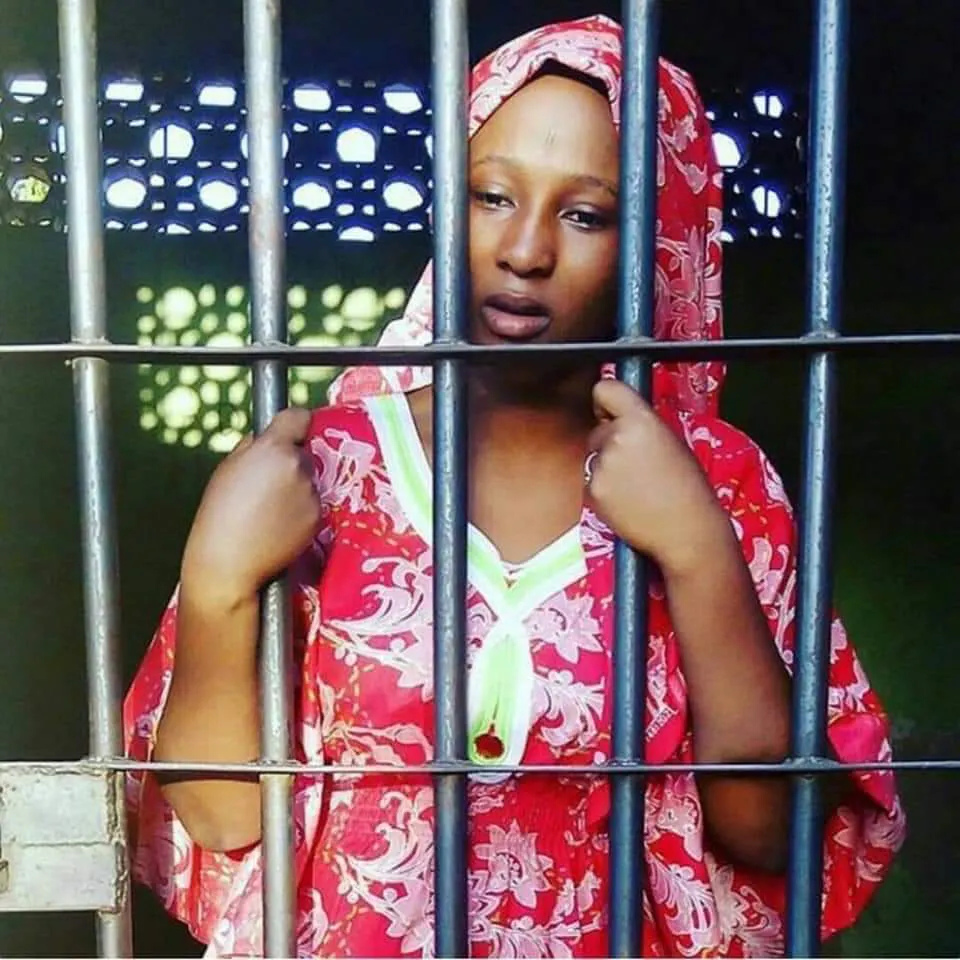
Defendant Labels Her Trial Miscarriage of Justice
Three weeks after she was convicted and sentenced to death by hanging for killing her husband, Bilyaminu Bello, Maryam Sanda has approached the Court of Appeal, Abuja Division, to appeal her death sentence and plead to be acquitted.
According to her, the judgment of the trial court was tainted by bias and prejudice, and this to the denial of her right to fair hearing and her consequent conviction based on circumstantial evidence, despite the reasonable doubt that was created by evidence of witnesses, lack of confessional statement, absence of a murder weapon, lack of corroboration of evidence by two or more witnesses and lack of autopsy report to determine the true cause of her husband’s death.
In the notice of appeal predicated on 20 grounds and filed by her legal team which was headed Rickey Tarfa (SAN), Maryam Sanda said the judgment of the trial court was, “A miscarriage of justice.”
According to her legal team: “The trial judge exhibited bias against the defendant in not ruling one way or the other on the said motion challenging his jurisdiction to entertain the charge” and “therefore fundamentally breached the right to fair hearing of the defendant.
“In ground two, the appellant contended that the trial judge erred and misdirected himself by usurping the role of the police when he assumed the duty of an Investigating Police Officer (IPO) as contained in Page 76 of his judgment”.
On the said page, Justice Halilu had said: “I wish to state that I have a duty thrust upon me to investigate and discover what will satisfy the interest and demands of justice.”
The appellant submitted that the wrongful assumption of the role of an IPO made “the trial judge fail to restrict himself to the evidence adduced before the court” and instead went fishing for evidence outside those that were brought before the court.
Read also, Nigeria's Oil Reserves Will Run Dry in 49 Years
The defendant insisted that while: “The duty of investigation is the constitutional preserve of the police, “the constitutional duty of a trial court is to assess the credible evidence before it and reach a decision based on its assessment.”
She argued that “The trial’s court usurpation of the duty of the police by taking it upon itself to investigate and discover negatively coloured its assessment of the available evidence and resulted in it reaching an unjust decision contrary to the evidence before it.”
On ground 5, the appellant argued that: “The trial judge erred in law and misdirected himself on the facts when he applied the doctrine of last seen and held at pages 82 – 83 of his judgment that the appellant was the person last seen with the deceased and thus bears the full responsibility for the death of the deceased, and thereby occasioned a miscarriage of justice.”
According to the particulars of error in support of ground 5: “There is no evidence before the trial judge that the defendant was the last person who saw the deceased alive” since “PW2 (Prosecution Witness 2), in his evidence, before the trial judge stated that he was called by the deceased, he saw the deceased and asked the deceased what was the problem.”
Check live rates of Dollar to Naira HERE
She added that Exhibit F, the statement of Sadiya Aminu, tendered before the trial court (who was initially charged as 4th defendant in the amended charge) also confirmed that the deceased was alive, though injured when she saw him.

It was submitted that: “The circumstantial evidence which the trial court relied upon in its application of the last seen doctrine does not lead to the conclusion that the defendant is responsible for the death of the deceased.”
Consequently, she prayed the Court of Appeal to allow her appeal, set aside her conviction and acquit her.